
Admin
12 Jun 2026 · 3 min read
What Is Custom ERP Software with with affordable Cost?
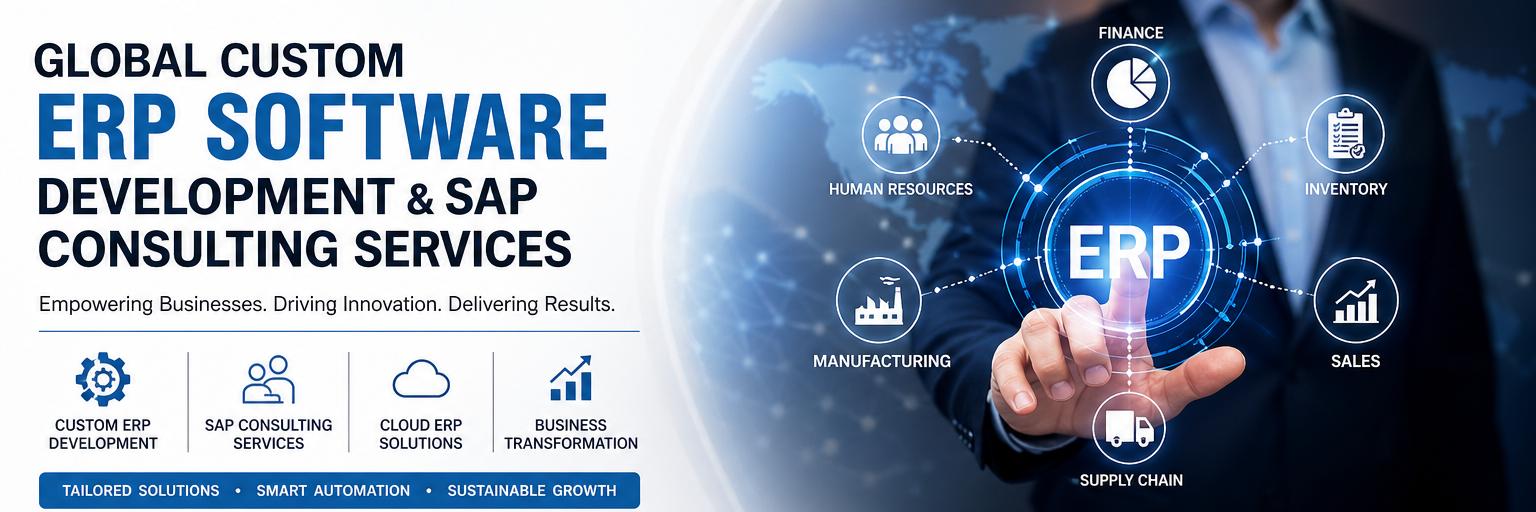
Custom ERP software is a tailored business management system that centralizes operations such as finance, inventory management, human resources, customer relationship management (CRM), procurement, and reporting. Instead of adapting your business to software limitations, a custom ERP solution adapts to your unique workflows. This flexibility helps organizations improve productivity, reduce manual work, and make faster, data-driven decisions.
Key Benefits of ERP Software Development
1. Business Process Automation :- Manual processes consume valuable time and increase the risk of errors. ERP software automates repetitive tasks such as order processing, payroll management, inventory updates, and approval workflows, allowing teams to focus on strategic activities. 2. Centralized Business Data :- A custom ERP system creates a single source of truth by consolidating data from multiple departments. This improves collaboration and ensures that everyone works with accurate, up-to-date information. 3. Improved Inventory Management :- Inventory management software integrated within ERP helps businesses monitor stock levels, manage warehouses, track orders, and optimize supply chains. Real-time visibility prevents stock shortages and overstock situations. 4. Advanced CRM Software Solutions :- Modern ERP platforms include CRM capabilities that help businesses manage leads, track customer interactions, improve customer service, and increase sales performance. 5. Enhanced HR Management System :- Human resource departments can automate employee onboarding, attendance tracking, payroll processing, performance management, and compliance reporting through an integrated HR management system. 6. Better Business Intelligence Analytics :- ERP solutions generate real-time dashboards and reports, providing valuable insights into sales performance, financial health, operational efficiency, and customer behavior.
Why Businesses Choose Cloud ERP Solutions
Cloud ERP solutions offer flexibility, accessibility, and reduced infrastructure costs. Teams can access business data securely from anywhere while benefiting from automatic updates, enhanced security, and scalable resources. Cloud-based ERP systems are particularly beneficial for growing businesses that require rapid expansion without significant IT investments.

The Role of ERP Integration Services
Many businesses already use specialized software for accounting, e-commerce, logistics, or customer support. ERP integration services connect these systems into a unified ecosystem, ensuring smooth data flow across departments and eliminating information silos.

Choosing the Right ERP Software Development Partner
Selecting the right ERP development company is critical. Look for a partner that understands your industry, business processes, scalability requirements, and integration needs. A successful ERP implementation should align technology with business goals while supporting future growth.
Conclusion
1. What are SAP solutions? SAP solutions are enterprise software applications that help businesses manage core processes such as finance, human resources, supply chain, procurement, manufacturing, and customer relationships through a unified platform. 2. Why should businesses implement SAP solutions? SAP solutions improve operational efficiency, automate workflows, provide real-time business insights, reduce manual errors, and help organizations make faster, data-driven decisions. 3. What is the difference between SAP ERP and custom ERP software? SAP ERP is a globally recognized enterprise platform with industry-specific best practices, while custom ERP software is developed specifically to meet an organization's unique operational and business requirements. 4. How long does SAP implementation take? The duration of an SAP implementation depends on business size, complexity, customization requirements, and the number of modules being deployed. Projects can range from a few months to over a year for large enterprises. 5. What industries benefit from SAP solutions? SAP solutions are widely used across manufacturing, retail, healthcare, logistics, automotive, construction, banking, telecommunications, and professional services industries.
Frequently Asked Questions
1. What are SAP solutions? SAP solutions are enterprise software applications that help businesses manage core processes such as finance, human resources, supply chain, procurement, manufacturing, and customer relationships through a unified platform. 2. Why should businesses implement SAP solutions? SAP solutions improve operational efficiency, automate workflows, provide real-time business insights, reduce manual errors, and help organizations make faster, data-driven decisions. 3. What is the difference between SAP ERP and custom ERP software? SAP ERP is a globally recognized enterprise platform with industry-specific best practices, while custom ERP software is developed specifically to meet an organization's unique operational and business requirements. 4. How long does SAP implementation take? The duration of an SAP implementation depends on business size, complexity, customization requirements, and the number of modules being deployed. Projects can range from a few months to over a year for large enterprises. 5. What industries benefit from SAP solutions? SAP solutions are widely used across manufacturing, retail, healthcare, logistics, automotive, construction, banking, telecommunications, and professional services industries.