Admin
23 Jun 2026 · 4 min read
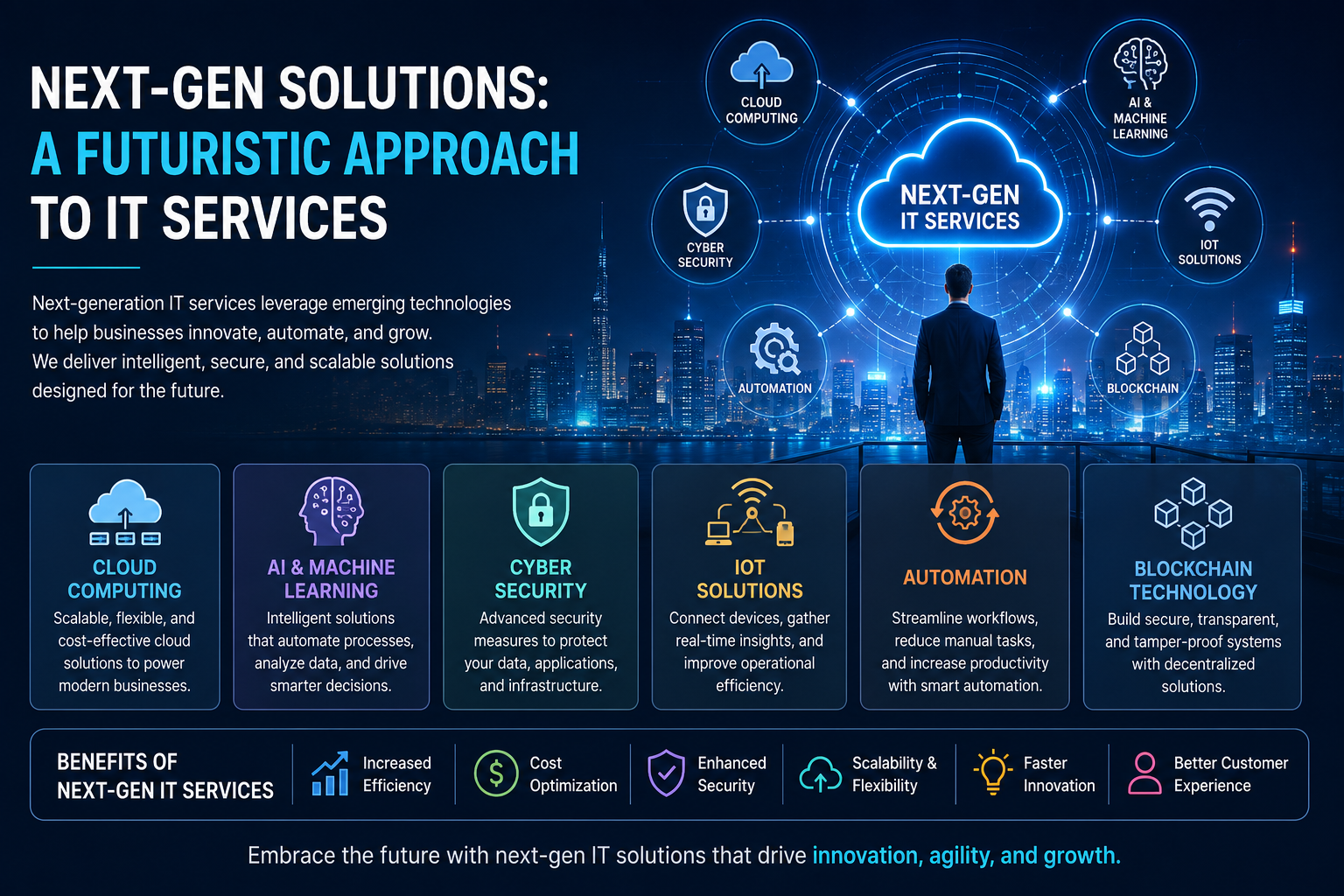
Next-generation IT services combine cutting-edge technologies such as cloud computing, artificial intelligence (AI), cybersecurity, the Internet of Things (IoT), and automation to create smarter and more efficient business environments. These solutions help organizations improve productivity, reduce costs, and deliver exceptional customer experiences.
The Evolution of IT Services
IT services have evolved significantly from basic hardware maintenance and software troubleshooting. Modern businesses now rely on advanced digital infrastructures that support remote work, data-driven decision-making, and seamless customer interactions. The shift toward next-gen IT solutions enables organizations to move from reactive problem-solving to proactive innovation, ensuring greater operational efficiency and business growth
Cloud Computing: The Foundation of Digital Transformation
Cloud computing has become a cornerstone of modern IT strategies. It allows businesses to access applications, data, and computing resources over the internet without investing heavily in physical infrastructure.
Benefits of Cloud Computing: - Enhanced scalability and flexibility - Reduced infrastructure costs - Improved collaboration and remote access - Faster deployment of applications - Reliable backup and disaster recovery By leveraging cloud technologies, businesses can adapt quickly to changing market demands while maintaining operational efficiency.
Artificial Intelligence and Machine Learning
Artificial Intelligence (AI) and Machine Learning (ML) are transforming the way businesses operate. These technologies enable systems to learn from data, automate processes, and make intelligent decisions.
Applications of AI and ML:
- Predictive analytics - Customer service chatbots - Process automation - Personalized customer experiences - Fraud detection and risk management AI-powered solutions help organizations increase productivity, reduce manual effort, and uncover valuable business insights.
Cybersecurity: Protecting Digital Assets
As cyber threats continue to grow, cybersecurity has become a critical component of every organization's IT strategy. Businesses must safeguard sensitive information, customer data, and operational systems from cyberattacks. Key Cybersecurity Measures: - Advanced threat detection - Data encryption - Identity and access management - Multi-factor authentication - Continuous monitoring and incident response A proactive cybersecurity approach helps businesses maintain trust, ensure compliance, and minimize risks.
Internet of Things (IoT): Connecting Everything
The Internet of Things (IoT) is creating intelligent ecosystems where devices, sensors, and systems communicate seamlessly. IoT Benefits for Businesses: - Real-time monitoring - Improved operational efficiency - Predictive maintenance - Better resource management - Enhanced customer experiences From smart offices to connected manufacturing facilities, IoT is driving innovation across industries.
Automation and Smart Operations
Automation is becoming a key driver of business efficiency. Modern IT services leverage automation tools to streamline repetitive tasks, improve accuracy, and reduce operational costs. Common Automation Areas: - IT infrastructure management - Customer support - Workflow approvals - Data processing - System monitoring By automating routine operations, businesses can focus on strategic initiatives and innovation.
Blockchain Technology: Building Trust and Transparency
Blockchain technology offers secure, transparent, and tamper-proof transactions. It is gaining popularity across industries such as finance, healthcare, logistics, and supply chain management.
Advantages of Blockchain:
- Enhanced security - Greater transparency - Improved data integrity - Faster transactions - Reduced operational complexity Organizations are increasingly exploring blockchain to improve trust and efficiency in digital processes.
Benefits of Next-Generation IT Services
Businesses that adopt futuristic IT solutions can enjoy numerous advantages: - Increased operational efficiency - Lower infrastructure costs - Enhanced security and compliance - Better scalability and flexibility - Faster innovation cycles - Improved customer satisfaction - Competitive market advantage These benefits empower organizations to stay ahead in a rapidly changing digital environment.
The Future of IT Services
The future of IT services will be driven by intelligent automation, AI-powered decision-making, cloud-native architectures, and enhanced cybersecurity frameworks. Businesses that embrace these innovations today will be better positioned to navigate future challenges and capitalize on emerging opportunities. As digital transformation accelerates, next-gen IT services will continue to shape how organizations operate, innovate, and grow.
Conclusion
Next-generation IT services are revolutionizing the business landscape. By integrating cloud computing, AI, cybersecurity, IoT, automation, and blockchain technologies, organizations can create agile, secure, and future-ready operations. Investing in futuristic IT solutions is no longer an option—it is a necessity for businesses that want to remain competitive, drive innovation, and achieve sustainable growth in the digital age.
Frequently Asked Questions (FAQs) :- 1. What are next-generation IT services? Next-generation IT services use advanced technologies such as cloud computing, artificial intelligence (AI), cybersecurity, automation, IoT, and blockchain to improve business operations, security, and scalability. 2. How do next-gen IT services benefit businesses? They help businesses reduce costs, increase efficiency, improve security, automate repetitive tasks, and accelerate digital transformation. 3. Why is cloud computing important in modern IT services? Cloud computing provides flexible, scalable, and cost-effective access to applications and data while reducing the need for expensive on-premise infrastructure. 4. How does Artificial Intelligence improve IT operations? AI helps automate tasks, analyze large amounts of data, predict trends, enhance customer support, and improve decision-making processes. 5. What role does cybersecurity play in next-gen IT solutions? Cybersecurity protects business data, systems, and networks from cyber threats, ensuring business continuity, regulatory compliance, and customer trust.