Admin
23 Jun 2026 · 3 min read
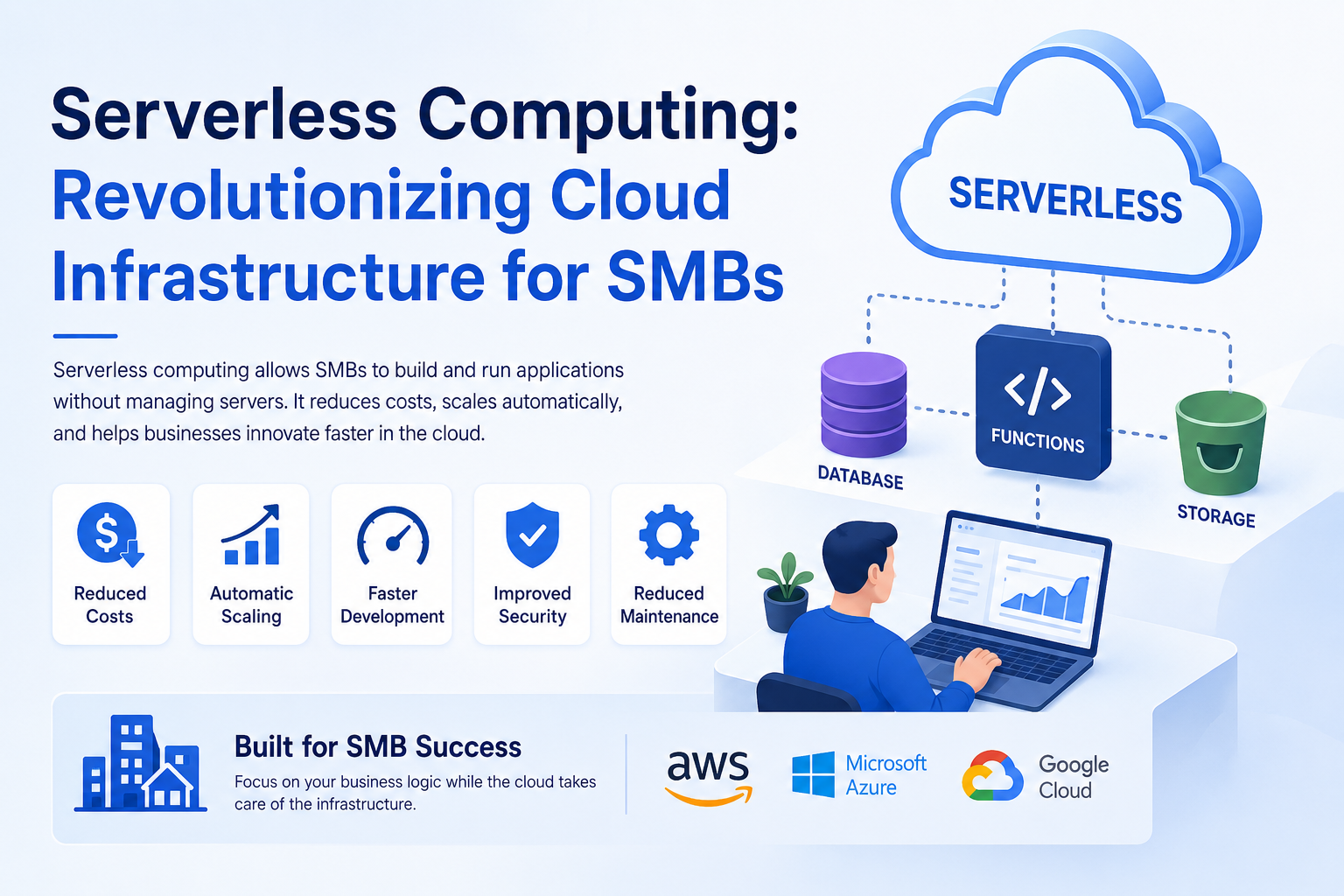
. One technology that is transforming how businesses manage their applications and infrastructure is serverless computing. Serverless computing allows businesses to build and run applications without managing physical servers. Instead, cloud providers handle the infrastructure, maintenance, scaling, and updates, allowing organizations to focus entirely on their business goals and innovation.
What is Serverless Computing?
Serverless computing does not mean there are no servers. The servers still exist, but they are managed entirely by cloud service providers such as Amazon Web Services (AWS), Microsoft Azure, and Google Cloud. Businesses simply deploy their code, and the cloud platform automatically handles the underlying infrastructure.
Key Benefits of Serverless Computing for SMBs
1. Reduced Infrastructure Costs Traditional IT environments require businesses to purchase, maintain, and upgrade servers. Serverless computing eliminates these expenses by charging only for actual usage, helping SMBs optimize their technology budgets. 2. Automatic Scaling One of the biggest advantages of serverless architecture is automatic scalability. Applications can instantly scale up during periods of high demand and scale down when traffic decreases, ensuring optimal performance without manual intervention. 3. Faster Application Development With infrastructure management handled by the cloud provider, developers can focus on creating new features and improving customer experiences. This accelerates development cycles and enables faster deployment of applications. 4. Improved Business Agility Serverless platforms allow businesses to quickly launch new products, services, and digital solutions. SMBs can respond faster to market changes and customer needs without investing heavily in infrastructure. 5. Reduced Maintenance Burden Cloud providers manage software updates, security patches, monitoring, and system maintenance. This significantly reduces the workload on internal IT teams and minimizes operational complexities.
Common Use Cases for Serverless Computing
Serverless computing can support a wide range of business applications, including: - Web and mobile applications - E-commerce platforms - Data processing and analytics - API development - Image and video processing - Automated workflows and notifications - IoT applications Its flexibility makes it suitable for businesses of all sizes seeking efficient cloud solutions
Challenges to Consider
While serverless computing offers numerous advantages, SMBs should also be aware of potential challenges: - Vendor lock-in when relying heavily on a single cloud provider - Cold-start latency for infrequently used functions - Complexity in monitoring and debugging distributed applications - Cost inefficiencies for consistently high-volume workloads Careful planning and expert guidance can help organizations overcome these challenges and maximize the benefits of serverless adoption.
Why Serverless is the Future for SMBs
As digital transformation continues to accelerate, serverless computing is becoming a key component of modern cloud strategies. It enables SMBs to access enterprise-level scalability, flexibility, and performance without the overhead of managing complex infrastructure. Industry adoption continues to grow as businesses recognize its ability to improve efficiency, reduce costs, and drive innovation.
Conclusion
Serverless computing is changing the way SMBs approach cloud infrastructure. By eliminating server management, reducing operational costs, and providing automatic scalability, it empowers businesses to focus on growth and innovation rather than IT maintenance. Organizations that embrace serverless technologies today can gain a significant competitive advantage, improve operational efficiency, and build a more agile digital future. Whether you're launching a new application or modernizing existing systems, serverless computing offers a powerful path toward smarter and more cost-effective cloud operations.
Frequently Asked Questions (FAQs) 1. What is serverless computing? Serverless computing is a cloud computing model where the cloud provider manages the servers, infrastructure, and scaling, allowing businesses to focus on developing and running applications. 2. Is serverless computing really server-free? No. Servers are still used, but they are managed by the cloud provider. Businesses do not need to worry about provisioning, maintenance, or updates. 3. How does serverless computing help SMBs save money? Serverless platforms use a pay-as-you-go pricing model, meaning businesses only pay for the resources they consume instead of maintaining dedicated servers. 4. Can serverless applications handle sudden traffic spikes? Yes. Serverless platforms automatically scale resources up or down based on demand, ensuring consistent application performance. 5. What are common use cases for serverless computing? Common use cases include web applications, mobile backends, APIs, data processing, e-commerce platforms, IoT solutions, and automated workflows.