
Admin
11 Jun 2026 · 2 min read
Manage Your Entire Business from a Single Platform
Running a business involves managing multiple departments, including finance, sales, inventory, procurement, human resources, customer relationships, and compliance. When these processes operate on separate systems, businesses often face delays, data inconsistencies, and operational inefficiencies. An end-to-end ERP (Enterprise Resource Planning) solution brings all your business functions together into one centralized platform. Instead of juggling multiple applications, you can manage every operation from a single dashboard, helping your team work faster, smarter, and more efficiently.
Manage Your Entire Business from a Single Platform
Running a business involves managing multiple departments, including finance, sales, inventory, procurement, human resources, customer relationships, and compliance. When these processes operate on separate systems, businesses often face delays, data inconsistencies, and operational inefficiencies. An end-to-end ERP (Enterprise Resource Planning) solution brings all your business functions together into one centralized platform. Instead of juggling multiple applications, you can manage every operation from a single dashboard, helping your team work faster, smarter, and more efficiently.
What Is an End-to-End ERP Software?
An end-to-end ERP software is a comprehensive business management system that integrates all core business processes into one unified platform. It provides real-time visibility into operations, automates routine tasks, and improves collaboration across departments. Whether you're a small business, a growing enterprise, or a large organization, ERP software helps streamline operations and supports data-driven decision-making.

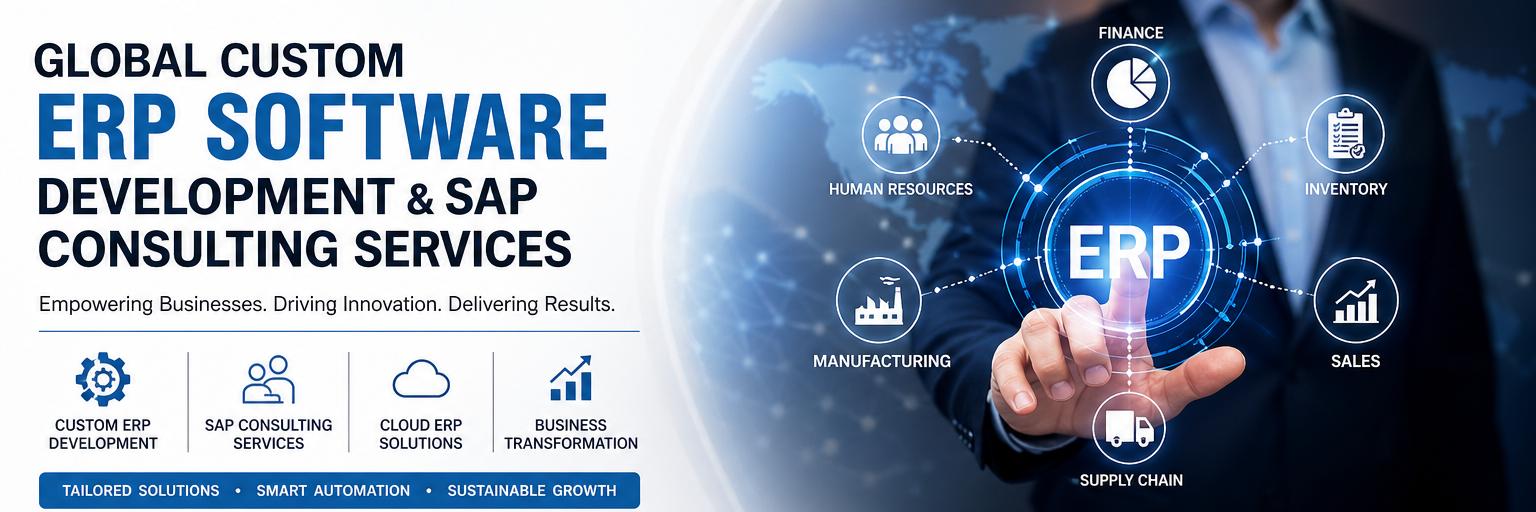
Key Business Functions Managed by ERP Software
Improved Productivity :- Automate repetitive tasks and eliminate manual data entry across departments. Better Decision-Making :- Access real-time business data and reports to make informed decisions quickly. Reduced Operational Costs :- Minimize software expenses by replacing multiple systems with a single integrated platform. Enhanced Data Accuracy :- Maintain one source of truth across all departments and reduce errors caused by duplicate data. Scalability for Growth :- Adapt to changing business needs without replacing your core management system.
Benefits of Using a Unified ERP System
ERP solutions are ideal for: - Manufacturing companies - Retail businesses - Wholesale distributors - Service providers - E-commerce businesses - Logistics companies - Growing startups - Large enterprises

Frequently Asked Questions :- 1. What does ERP stand for? ERP stands for Enterprise Resource Planning, a software system that integrates various business functions into one platform. 2. Why is ERP important for businesses? ERP improves efficiency, reduces manual work, enhances data accuracy, and provides real-time visibility into business operations. 3. Is cloud ERP suitable for small businesses? Yes. Cloud ERP solutions are scalable, affordable, and designed to support businesses of all sizes, including startups and small businesses. 4. Can ERP software help with GST compliance? Many ERP systems offer GST-compliant invoicing, tax calculations, and reporting features to help businesses meet regulatory requirements. 5. How does ERP improve inventory management? ERP provides real-time inventory tracking, automated stock updates, demand forecasting, and warehouse management capabilities.